
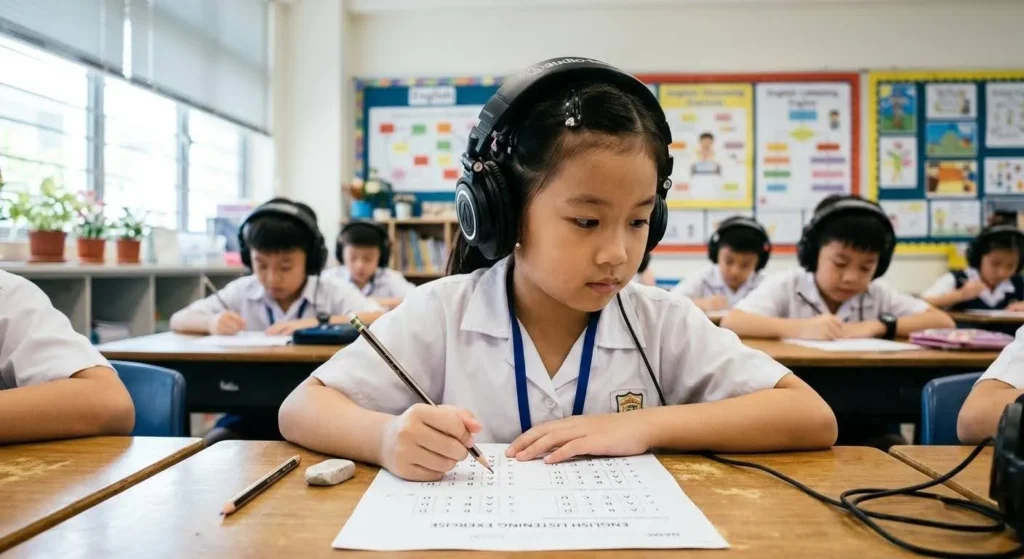
Listening comprehension is often the most overlooked part of PSLE English, precisely because it feels easy. Pupils assume that if they can listen, they can pass. In reality, the PSLE English listening comprehension paper rewards focused, trained listening, and a little practice here can lift a score that revision elsewhere cannot.
This guide explains the paper format, the question types to expect, and simple, practical tips to help your child listen well under exam conditions.
Quick answer: PSLE English listening comprehension is a multiple-choice paper where pupils listen to a range of texts, such as announcements, conversations and news items, then answer questions, some using pictures. Success comes from active listening, reading the options before the audio plays, and steady practice with recordings.
What Is The PSLE Listening Comprehension Paper?
Listening comprehension is one component of PSLE English. Pupils listen to a series of spoken texts and answer multiple-choice questions based on what they hear. The texts vary widely, from everyday conversations and announcements to short talks and news reports, and some questions are answered by choosing the correct picture.
Because each text is usually played more than once, the skill being tested is not just hearing, but listening with purpose and holding on to the right details.
Common Question Types
- Detail questions: These ask for a specific fact from the text, such as a time, a place or a reason. The detail is often stated clearly, so the challenge is catching it.
- Main idea questions: These ask what the text is mainly about, testing whether your child followed the whole message rather than one line.
- Picture questions: These require choosing the image that matches what was described, so listening for descriptive detail matters.
- Inference questions: These ask your child to work out something not said directly, such as how a speaker feels or what will happen next.
Read The Options Before The Audio Plays
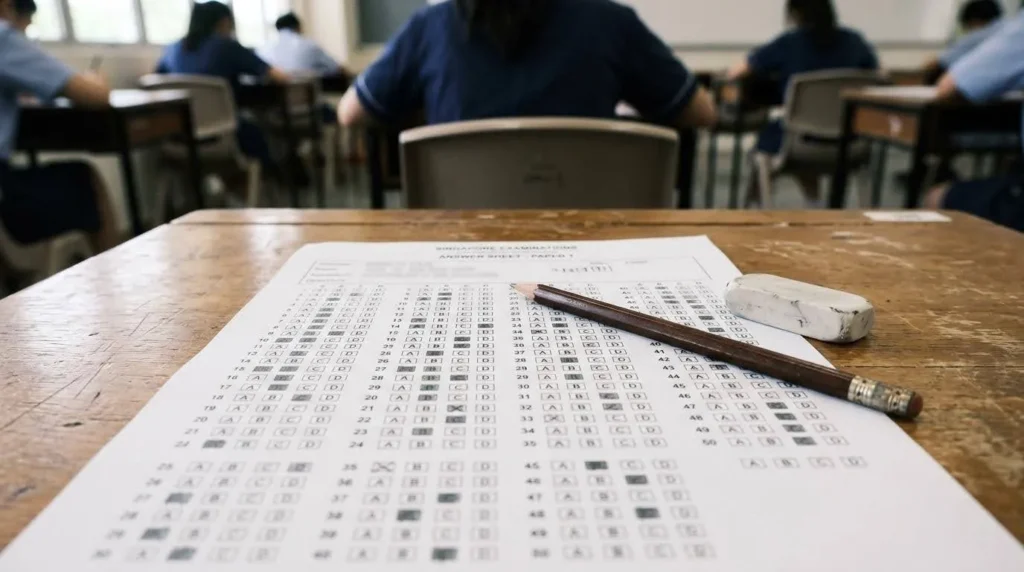
There is usually a short pause before each recording. The best use of that pause is to read the question and the answer options quickly, so your child knows exactly what to listen for once the audio begins.
- Predict the answer: Reading the options first lets the mind anticipate the kind of information coming, which makes it easier to catch.
- Look at the pictures: For picture questions, studying the differences between the options in advance shows what detail to listen for.
Practise Active Listening At Home
Listening is a trainable skill, and daily life offers plenty of practice. Encourage your child to listen to English news, audiobooks, podcasts or documentaries, then ask them to summarise what they heard in their own words.
- Summarise afterwards: Retelling a clip in a sentence or two builds the habit of listening for the main idea.
- Listen for specifics: Ask your child to catch a particular detail, such as a name or a number, to sharpen focus on key information.
- Vary the accents: Exposure to a range of English accents makes exam recordings feel far more familiar.
Exam-Day Listening Tips
- Stay calm if you miss something: If a detail is missed, move on and catch it on the second reading rather than panicking and losing the next question too.
- Use both readings: Confirm the answer on the first reading and check it on the second, rather than committing too early.
- Mark clearly: Fill in the answer sheet neatly so a correct choice is not lost to a careless mark.
How To Build Strong Listening Skills
Listening practice works best as part of a steady routine rather than a last-minute rush. Our guide on how to prepare for the PSLE sets out how to build that routine, and because the oral and listening components share the same close-attention skills, English oral practice reinforces listening at the same time.
For guided, exam-focused support, our primary English tuition gives pupils regular listening practice under realistic conditions, as part of a wider English tuition programme that strengthens every paper.
Listening Your Way To A Better Score
Listening comprehension rewards preparation that many pupils skip. With active listening habits, a clear method for using the pauses and the two readings, and regular practice, your child can turn an easy-to-neglect paper into reliable marks.
If you would like structured help building these skills, DO Applied Learning by Epoch Talent Academy is here to support your child. Contact us to talk about the right programme for the PSLE.
Want your child fully prepared for PSLE English? Book a trial lesson with our team today.
Frequently Asked Questions About PSLE Listening Comprehension
What is tested in PSLE English listening comprehension?
Pupils listen to a range of spoken texts, such as conversations, announcements and news items, then answer multiple-choice questions, some using pictures. The paper tests detail, main idea, inference and the ability to match descriptions to images.
How can my child improve at listening comprehension?
Regular active listening helps most: listening to English news, audiobooks or podcasts, then summarising the content and catching specific details. Practising with past-year recordings under timed conditions builds exam readiness.
Should my child read the questions before listening?
Yes. Using the pause before each recording to read the question and options, and to study any pictures, tells your child exactly what to listen for, which makes catching the right information much easier.
How many times is each listening text played?
Each text is usually played more than once, so pupils should use the first reading to find the answer and the second to confirm it. If a detail is missed the first time, staying calm and catching it on the repeat is key.
Can tuition help with listening comprehension?
Yes. Tuition provides regular listening practice under realistic conditions, teaches strategies for each question type, and gives feedback, which helps pupils turn a commonly neglected paper into a source of reliable marks.