
Comprehension is where marks are won and lost quietly. A student can understand a passage perfectly and still lose marks by answering the wrong question, or misread a passage and lose them before they even begin. The right reading comprehension strategies fix both problems by making reading active rather than passive.
These are practical techniques Singapore students can use in any comprehension paper, from primary school right through to the O-Levels, to read faster, understand more, and answer with confidence.
Quick answer: Effective reading comprehension strategies include previewing the passage, reading actively by annotating as you go, identifying the main idea of each paragraph, and always reading the question carefully before answering. Together these help students understand more and avoid careless mistakes.
Preview Before You Read In Detail
Skim the passage first to get the big picture: the title, the first and last paragraphs, and the opening sentence of each paragraph. This gives you a mental map, so when you read in detail you know where the passage is heading and where key information sits.
Read Actively, Not Passively
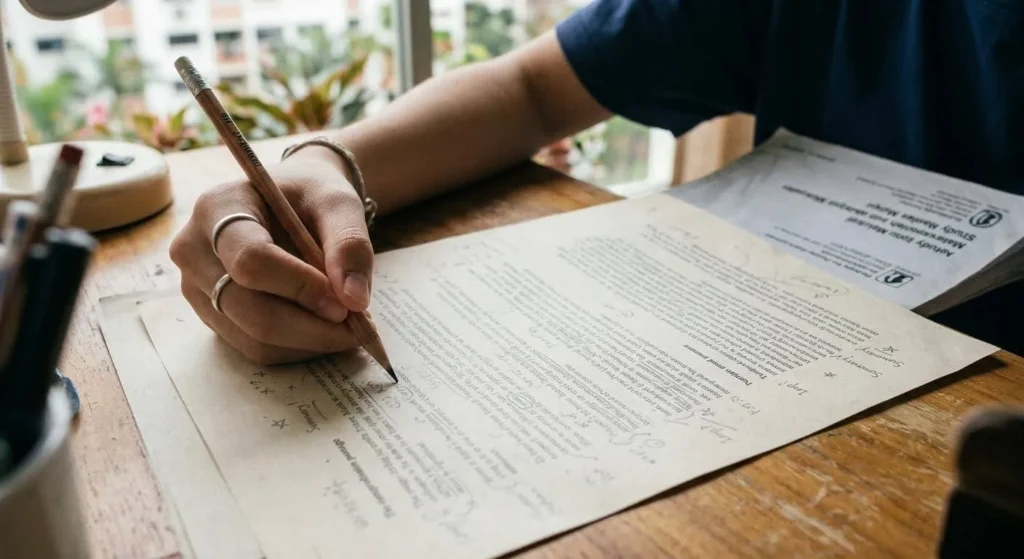
Passive reading, letting your eyes drift over the words, is the enemy of comprehension. Active reading keeps your mind engaged and leaves a trail you can return to when you answer questions.
- Underline key ideas: Mark the main point of each paragraph and any words that signal importance, such as “however”, “because” or “most importantly”.
- Jot quick notes: A word or two in the margin summarising each paragraph makes it easy to locate answers later.
- Question as you go: Ask yourself what the writer is saying and why. Curiosity keeps you focused and improves recall.
Find The Main Idea Of Each Paragraph
Most paragraphs are built around a single main idea, often in the first or last sentence, with the rest as supporting detail. Training yourself to spot that main idea helps you understand the passage as a whole and answer big-picture questions with ease.
Read The Question Before You Answer
This is the strategy that saves the most marks. Many students lose marks not because they misunderstood the passage, but because they misunderstood the question.
- Spot the question word: Words like “why”, “how”, “explain” and “suggest” each demand a different kind of answer. Identify what is being asked before you write.
- Note the marks: A two-mark question usually needs two distinct points. Let the marks tell you how much to write.
- Answer in your own words: Where a question asks you to explain or infer, lifting a sentence straight from the passage rarely earns full marks. Rephrase to show you understood.
Use Context To Unlock Difficult Words
You will not know every word, and you do not need to. When you hit an unfamiliar word, read the sentence around it for clues, look at whether it is positive or negative, and use the overall meaning of the passage to make a sensible guess. This keeps you moving instead of getting stuck.
Manage Your Time In The Paper
- Budget per section: Divide your time by the marks on offer, and do not let one hard question swallow the minutes meant for easier ones.
- Do not leave blanks: An attempted answer can earn marks, a blank never will. Make a reasoned attempt at every question.
- Save time to check: Leave a few minutes at the end to reread your answers against the questions and fix any obvious slips.
How To Practise Comprehension Skills
Comprehension improves with regular, varied reading and honest review of the questions you get wrong. Related skills reinforce each other, so practising visual text comprehension sharpens the same close-reading habits, and solid preparation techniques from our guide on how to prepare for the PSLE help students build a steady study routine.
For structured support, our primary English tuition and broader English tuition programmes teach these strategies explicitly and give students the marked practice they need to make them automatic.
Reading With Purpose
Comprehension is a skill, not a talent, and skills grow with the right practice. When students preview, read actively, focus on main ideas and read every question carefully, they stop leaving easy marks behind.
If your child would benefit from a clear method and regular feedback, DO Applied Learning by Epoch Talent Academy can guide them there. Contact us to find the right programme for their level.
Want your child to read and answer with confidence? Arrange a trial lesson with our English team.
Frequently Asked Questions About Reading Comprehension Strategies
What are the best reading comprehension strategies for students?
The most effective strategies for reading comprehension are previewing the passage, reading actively with annotation, identifying the main idea of each paragraph, and reading each question carefully before answering. Used together, they improve both understanding and accuracy.
How can I help my child understand passages better?
Encourage active reading, such as underlining key points and summarising each paragraph in a few words, and read together regularly. Discussing what a passage means and why builds the comprehension habit far better than silent, passive reading.
Why does my child lose marks even when they understand the passage?
This usually happens because the question was misread or answered in the wrong way, not because the passage was misunderstood. Teaching students to identify the question word and note the marks available prevents most of these avoidable losses.
How do I improve reading comprehension speed?
Previewing the passage first and reading actively both improve speed, because the student knows where information sits and stays focused. Regular reading also builds fluency, which naturally makes comprehension faster over time.
Can tuition improve reading comprehension?
Yes. Tuition teaches comprehension strategies explicitly and provides marked practice with feedback, so students learn from their mistakes and apply the techniques consistently across different passage types.